No products in the cart.
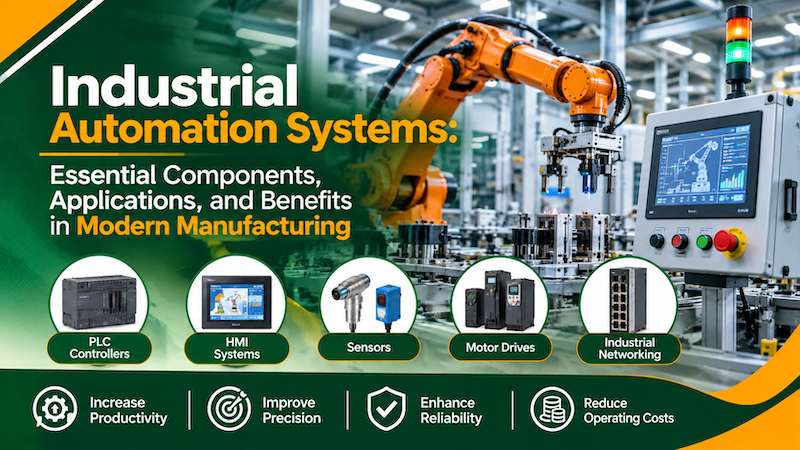
Industrial automation systems have transformed the way modern factories operate. By integrating control technologies, sensors, and software, manufacturers can achieve higher productivity, consistent quality, and safer working environments. Whether you are building a new production line or upgrading existing equipment, understanding the core components and real-world benefits of automation is the first step toward smarter manufacturing.
What Are Industrial Automation Systems?
Industrial automation systems are integrated networks of hardware and software that control industrial processes with minimal human intervention. These systems collect data from machines, make decisions through programmable controllers, and execute actions that keep production running efficiently. From simple relay logic to advanced PLC-based architectures, automation is the backbone of modern manufacturing.
Essential Components of Industrial Automation Systems
A reliable automation system depends on several core components working together. Understanding each element helps engineers and maintenance teams design robust and scalable control architectures.
1. Programmable Logic Controllers (PLCs)
The PLC is the brain of most automation systems. It reads inputs from sensors, executes control logic, and sends commands to actuators and output devices. Modern PLCs support advanced communication protocols, safety functions, and integration with SCADA and HMI systems. For a wide selection of trusted PLC platforms and expansion modules, explore the PLCs & IO range from Nani Rohaeti.
2. Input/Output (I/O) Modules
I/O modules act as the interface between the PLC and field devices. Digital I/O handles on/off signals such as switches and relays, while analog I/O manages variable signals like temperature, pressure, and flow. Remote I/O and expansion modules allow flexible system design across large plants.
3. Human-Machine Interfaces (HMIs)
HMIs provide operators with a clear view of process status and allow them to adjust parameters when needed. Touchscreen panels and graphical displays improve usability and reduce the risk of operational errors.
4. Sensors and Transmitters
Sensors convert physical parameters into electrical signals that the control system can process. Transmitters for humidity, particulate matter, gas flow, and energy measurement ensure accurate monitoring and data-driven decisions.
5. Actuators and Control Devices
Actuators, relays, contactors, and drives convert control signals into physical movement or switching actions. Pneumatic and electric actuators are widely used for valve control in demanding and hazardous environments.
6. Industrial Automation Controls and Accessories
Complete control panels also require signal converters, push buttons, circuit protection, and wiring accessories. A trusted supplier of these building blocks is essential for consistent system performance. Browse the full Industrial Automation & Controls catalog for genuine components from leading brands.
Applications of Industrial Automation Systems
Automation is used across virtually every manufacturing sector. Common applications include:
- Factory and production line automation for assembly, packaging, and material handling.
- Process control in chemical, food and beverage, and pharmaceutical plants.
- Machine safety systems using safety controllers and safe encoders.
- Environmental monitoring with transmitters for air quality, humidity, and particulate measurement.
- Energy management using ultrasonic energy meters and flow controllers.
- Remote and hazardous area control with NEMA-rated actuators and rugged radios.
Benefits of Industrial Automation Systems in Modern Manufacturing
Higher Productivity and Throughput
Automated systems run continuously with consistent cycle times, increasing output and reducing bottlenecks.
Improved Product Quality
Precise control and real-time monitoring reduce variation and defects, leading to more consistent product quality.
Enhanced Safety
Automation removes operators from hazardous tasks and integrates safety controllers that protect both people and equipment.
Reduced Downtime and Maintenance Costs
Genuine, high-quality automation components and predictive diagnostics help prevent failures and simplify maintenance.
Scalability and Flexibility
Modular PLC and I/O architectures allow manufacturers to expand systems as production needs grow.
Better Data and Decision-Making
Automation systems generate valuable process data that supports continuous improvement and energy optimization.
Choosing the Right Automation Partner
Selecting genuine components from authorized channels is critical to system reliability and longevity. Nani Rohaeti, based in Batam, Indonesia, supplies a comprehensive range of automation products, including PLCs, I/O modules, safety controllers, transmitters, and actuators. Explore the complete PLCs & Automation collection to find the exact parts for your project, with competitive pricing and fast delivery across Indonesia and Southeast Asia.
Conclusion
Industrial automation systems are no longer a luxury—they are a necessity for manufacturers who want to stay competitive. By understanding the essential components and leveraging proven automation technologies, plants can achieve higher efficiency, better safety, and long-term operational success. Start building or upgrading your automation system with reliable components from a trusted supplier today.